
Invited Speakers - 40th Annual Meeting of the Society for Thermal Medicine
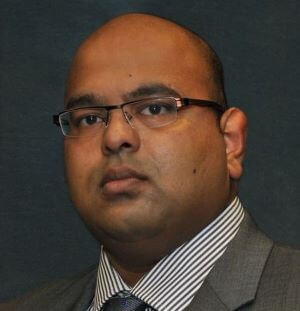
Dr. Anilchandra Attaluri, PhD
Design, Verification and Validation of a Spatially Confined Magnetic Nanoparticle Thermal Therapy Device
Dr. Anilchandra Attaluri, PhD, received the Ph.D. in mechanical engineering with a focus on biotransport and imaging from the University of Maryland at Baltimore County, Baltimore, MD, USA, in 2012. He received post-doctoral training in magnetic hyperthermia from the Department of Radiation Oncology & Molecular Radiation Sciences, The Johns Hopkins University School of Medicine, Baltimore. In 2017, he joined the School of Science, Engineering, and Technology, The Pennsylvania State University, Harrisburg, PA, USA, as an Associate Professor of mechanical engineering. His research interests include the field of theranostic technologies and systems with an emphasis on devices and image-based modeling. He teaches courses on capstone design, engineering simulations, and computational techniques for biomedical applications. Focusing on experimental, preclinical, and finite element analysis, his work resulted in novel applicators and pioneering data for improving magnetic nanoparticle hyperthermia.
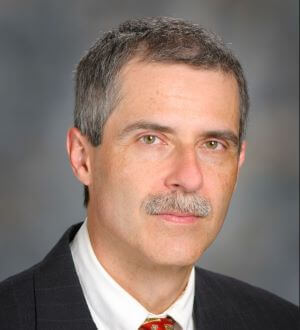
Dr. Erik Cressman, PhD, MD, FSIR
Real-time Molecular Tools for Unraveling Effects of Interventions
Dr. Erik Cressman, PhD, MD, FSIR is a tenured Professor in the Department of Interventional Radiology at MD Anderson Cancer Center. In addition to patient care duties, he studies novel applications of chemistry in vivo in large animal models. He invented the field of image-guided thermochemistry, applying it through both thermochemical ablation and thermoembolization. To provide deeper insight into the effects of in vivo chemistry, he has introduced the use of mass spectrometry imaging coupled with multiplex immunofluorescence to image-guided research. He is a past president of the Society for Thermal Medicine and more recently he served as chair of the Society of Interventional Radiology annual scientific meeting. He has also served as a charter member of the IGIS study section of the NIH. He is the recipient of numerous awards including recognition as a Fellow in the Society of Interventional Radiology and is one of the only interventional radiologists in North America who are members of the Academy of Radiology’s Council of Distinguished Investigators.
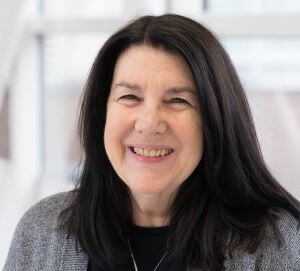
Dr. Sharon S. Evans, PhD
Myeloid Cells are Major Obstacles to Cancer Immunity during Systemic Thermal Therapy
Dr. Sharon S. Evans, PhD, is a Professor of Oncology in the Department of Immunology at Roswell Park Comprehensive Cancer Center. She was a research scientist at Merck and Company in Rahway NJ during her graduate training at New York University and performed her doctoral training at the University of Buffalo. Her post-doctoral research at as an American Cancer Society fellow Roswell Park explored the role of cytokines in boosting antibody-mediated immune responses. Dr. Evans joined the faculty of the Department of Immunology at Roswell Park in 1987. Dr. Evans is internationally recognized in the multidisciplinary fields of cytokine biology, lymphocyte trafficking, and thermal regulation. Dr. Evans’ research program focuses on understanding the mechanistic underpinnings controlling adhesion and chemokine-dependent leukocyte trafficking within lymphoid organs and the complex tumor microenvironment. Preclinical findings from Dr. Evans’ laboratory guided the development of Phase I/II clinical trials in thermal therapy and for the study of tumor and lymph node vascular function using live-imaging microscopy in cancer patients. Dr. Evans has also maintained a long-standing commitment to graduate education, receiving multiple mentorship awards and training over 35 pre-doctoral fellows, MD/PhD students, Masters, and postdoctoral and clinical fellows. Dr. Evans has actively served the Society for Thermal Medicine as a board member and past-President, and scientific program chair for the STM annual meeting in Portland, Oregon. Dr. Evans was a recipient of the STM 29th J. Eugene Robinson Award (2018) and the 2022 William C. Dewey Award.
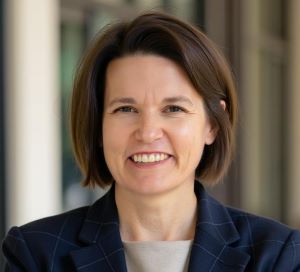
Dr. Allison Payne, PhD
Advancements in MR Thermometry for Thermal Therapies
Dr. Allison Payne, PhD is a Professor and the Vice Chair of Research for the Department of Radiology and Imaging Sciences at the University of Utah. She earned her PhD in Mechanical Engineering and completed postdoctoral training in medical imaging at the University of Utah before joining the Utah Center for Advanced Imaging Research at the University of Utah in 2011. Her research focuses on developing and applying medical imaging and focused ultrasound technologies for the improvement of human health. Dr. Payne has participated in multiple committee and leadership roles in numerous societies including the International Society of Magnetic Resonance in Medicine, the International Society of Therapeutic Ultrasound and the Society of Thermal Medicine. She currently is serving as the chair of the NIH Imaging Guided Interventions and Surgery study section and is a Distinguished Investigator in the Academy for Radiology and Biomedical Imaging Research.
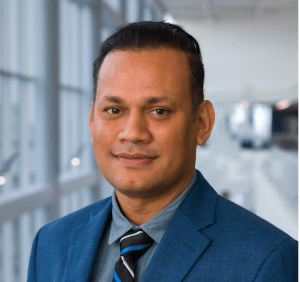
Dr. Ashish Ranjan, BVSc, PhD
Focused Ultrasound–Enabled Chemoimmunotherapy
Dr. Ashish Ranjan, BVSc, PhD, is an Endowed Professor of Radiation Oncology at UT Southwestern, where he serves as Vice Chair for Comparative Oncology and Research Innovation and Director of the Veterinary Research and Oncology Clinic. His research focuses on developing device-directed nanoparticle platforms for solid tumor chemo-immunotherapy, advancing image-guided, minimally invasive therapies across human and veterinary oncology. His work integrates engineering, nanomedicine, and translational clinical trials to accelerate bench-to-bedside innovation.
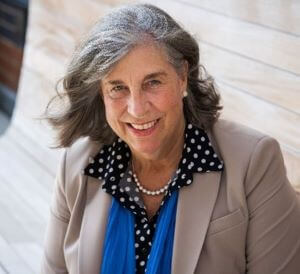
Dr. Elizabeth Repasky, PhD
It takes a lot of nerve to keep a T cell down! New Insights into the Role of Thermal Stress in Immunosuppression
Dr. Elizabeth Repasky, PhD, is a Distinguished Professor and the Lawrence J. Minet Chair in Immunology at Roswell Park Comprehensive Cancer Center. She served for nearly two decades as Program Leader of the Cancer Stress Biology Program and now serves as Roswell Park’s Director of Faculty Mentorship and Development. She earned her bachelor’s degree from Seton Hill University, completed her PhD at SUNY Buffalo, and conducted postdoctoral research at the California Institute of Technology. Repasky’s research focuses on thermoregulatory physiology and its influence on the tumor microenvironment and anti-tumor immunity, with the goal of improving cancer outcomes. She has authored nearly 260 peer‑reviewed publications and has been honored as a Distinguished Alumna by both the Jacobs School of Medicine and Biomedical Sciences at SUNY Buffalo and Seton Hill University. Her awards include Roswell Park’s Dr. Thomas B. Tomasi “Hope Award” and the J. Eugene Robinson and William C. Dewey Awards from the Society for Thermal Medicine. She also served for more than 20 years as a Senior Editor for the International Journal of Hyperthermia. Recognized by several awards for her mentorship and teaching, Dr. Repasky has served as a major advisor to numerous PhD and MD/PhD students and postdoctoral fellows.
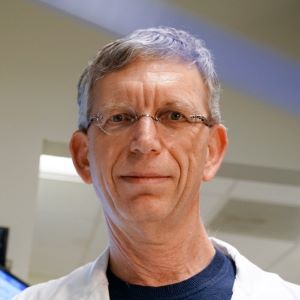
Gal Shafirstein, D.Sc.
Computer Simulations for Treatment Planning in Photothermal therapy
Gal Shafirstein, D.Sc. is a Professor of Oncology at Roswell Park Comprehensive Cancer Center, where he serves as Director of Photodynamic Therapy (PDT) Clinical Research and holds appointments in the Departments of Cell Stress Biology and Thoracic Surgery. His research focuses on image‑based treatment planning and light dosimetry for interstitial PDT and photothermal therapy, work supported by the U.S. National Cancer Institute, foundations, and industry partners. He has led the development of 11 Phase I and Phase I/II clinical trials for patients with solid tumors that are refractory to standard therapies. Dr. Shafirstein previously held positions at the University of Arkansas for Medical Sciences, the Timex Corporation, and the UK National Physical Laboratory. He earned his B.Sc. from Ben‑Gurion University and his M.Sc. and D.Sc. in Materials Science and Engineering from the Technion – Israel Institute of Technology.